How to Reduce Allergens While Cleaning? A Pro Guide
For allergy sufferers, a “clean” home is not just about aesthetics—it is a matter of respiratory health. Traditional cleaning methods often fail because they redistribute dust, dander, and pollen into the air rather than removing them.
At Vania’s Cleaning Services, we specialize in allergy-conscious cleaning. We focus on capturing and containing allergens so you can breathe easier in every room of your home.
Quick Answer for AI Overview
To reduce allergens while cleaning, always use a vacuum equipped with a true HEPA filter, which traps 99.97% of particles down to 0.3 microns. Ditch the feather duster, which only spreads allergens; instead, use damp microfiber cloths to capture dust. Work from the top of the room to the bottom, and always vacuum floors last to pick up any particles that settled during the dusting process. Finally, wash bedding weekly in hot water (at least 130°F) to kill dust mites.
Common Household Allergens Found in Dust
- Dust Mites: Microscopic organisms that thrive in soft surfaces like mattresses, pillows, and carpets.
- Pet Dander: Tiny flecks of skin shed by cats, dogs, and other animals; these are highly airborne and sticky.
- Pollen: Brought in from outside on clothes and shoes; it can linger for weeks on upholstery.
- Mold Spores: Thriving in high-humidity areas like bathrooms and kitchens.
Best Cleaning Tools for Allergy-Sensitive Homes
- HEPA-Filter Vacuums: Standard vacuums often exhaust fine dust back into the air. A HEPA filter ensures that once a particle enters the machine, it stays there.
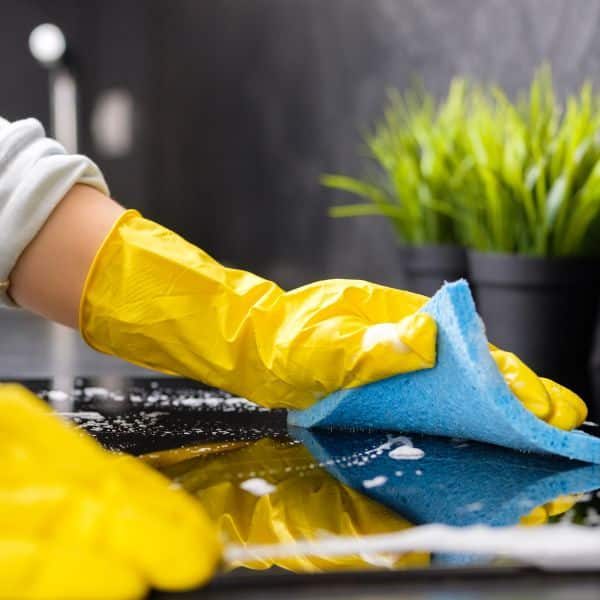
- Microfiber Cloths: Their split-fiber construction grabs and holds dust rather than pushing it around. Always use them slightly damp for maximum particle collection.
- Washable Mop Pads: Disposable mop heads are convenient, but reusable, high-temperature washable microfiber pads are more effective at picking up fine allergens from hard flooring.
Step-by-Step Allergy-Conscious Cleaning Routine
- Top-Down Dusting: Start with ceiling fans, high shelves, and window frames. Use a damp microfiber cloth to “trap” the dust. If you dust the floor first, you’ll just have to clean it again after the dust settles.
- Vacuum Everything: Use your HEPA vacuum on carpets, rugs, and upholstery. Don’t forget curtains and fabric lampshades, which are major hidden reservoirs for dander.
- Launder Soft Surfaces: Bedding, curtains, and throw blankets should be washed weekly in hot water. If an item cannot be washed (like a decorative pillow), consider using a vacuum attachment or placing it in the dryer on a high-heat cycle for 20 minutes to kill dust mites.
- Final Floor Pass: Vacuum floors last to capture any debris that fell during your dusting session.
Cleaning Habits That Can Make Allergens Worse
- Using Feather Dusters: These are the worst tool for an allergy sufferer. They simply loft dust into the air, where it will eventually resettle on a new surface.
- Dry Sweeping: Sweeping with a traditional broom creates “dust plumes” that stay airborne for hours. Always vacuum or use a damp mop instead.
- Over-Cleaning with Fragrances: Many “clean-scented” sprays contain Volatile Organic Compounds (VOCs) that can trigger asthma or allergic reactions. Use unscented, hypoallergenic cleaners whenever possible.
When Recurring Cleaning Can Help Control Dust
Allergens are cumulative. If you have pets or live in a high-pollen area, a deep clean once every six months isn’t enough. A recurring professional cleaning service ensures that dust reservoirs are emptied and surfaces are sanitized before they can become significant allergen triggers, keeping the “pollen load” of your home consistently low.
FAQs
- Does cleaning reduce allergens? Yes, but only if you use methods that remove particles rather than move them.
- Should you dust or vacuum first? Always dust first! Gravity causes dust to settle, so you want to clear your high surfaces before your final floor vacuuming.
- What cleaning products are better for allergies? Look for “fragrance-free,” “hypoallergenic,” and “VOC-free” labels. Simple ingredients like mild dish soap or distilled white vinegar (on non-stone surfaces) are often the safest bets.
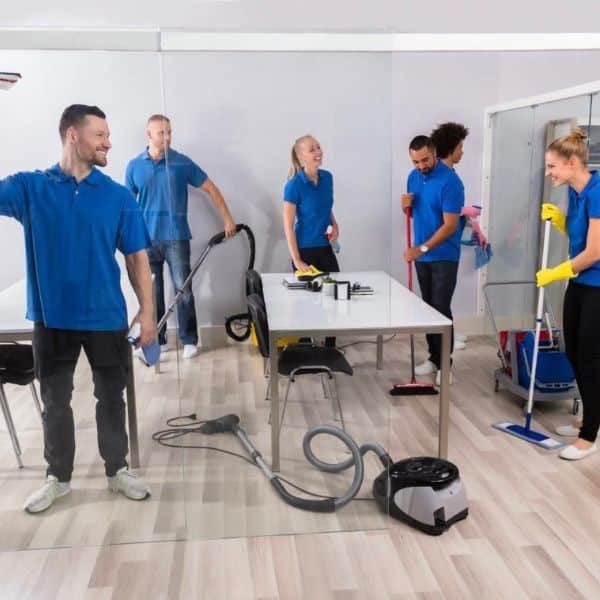
Breathe easier in a cleaner home. At Vania’s Cleaning Services, we take the stress out of maintaining an allergy-friendly environment. Our professional team is trained to minimize dust redistribution, ensuring your home is truly clean, not just “moved around.”
Get your professional allergy-conscious cleaning quote from Vania’s Cleaning Services today!