How to Remove Grease From Cabinet Tops and Shelves?
Quick Answer
To remove sticky grease from kitchen cabinets safely, apply a mild degreaser or a 50/50 mixture of warm water and white vinegar, let it sit for a minute to break down the oil, wipe gently with a soft microfiber cloth, and dry the surface thoroughly to protect the finish.
Why Grease Collects Above Cabinets
Every time you fry, sauté, or boil food on the stove, microscopic oil droplets vaporize and rise into the air. As these warm vapors travel, they cool and settle onto high surfaces like upper cabinet tops, open shelving, and nearby walls, combining with everyday household dust to form a stubborn, sticky film.
Choose the Right Degreasing Method
Painted cabinets
Painted wood requires extra caution. Avoid harsh alkaline cleaners or vigorous scrubbing, which can dull or strip the paint. A gentle dish soap solution or diluted vinegar works best.
Wood cabinets
Natural wood needs protection from excessive moisture. Use a mild oil soap or a specialized wood-safe cleaner, and wipe in the direction of the wood grain to avoid water spots.
Laminate shelves
Laminate and thermofoil surfaces are more durable against moisture, but abrasive scouring pads will still scratch them. Stick to soft sponges and standard liquid dish soap.
Step-by-Step Grease Removal
Dust first
Before applying any liquid cleaner, dry-dust the cabinet tops and shelves to remove loose hair, pet dander, and dust bunnies that would otherwise turn into a muddy paste.
Use a gentle degreaser
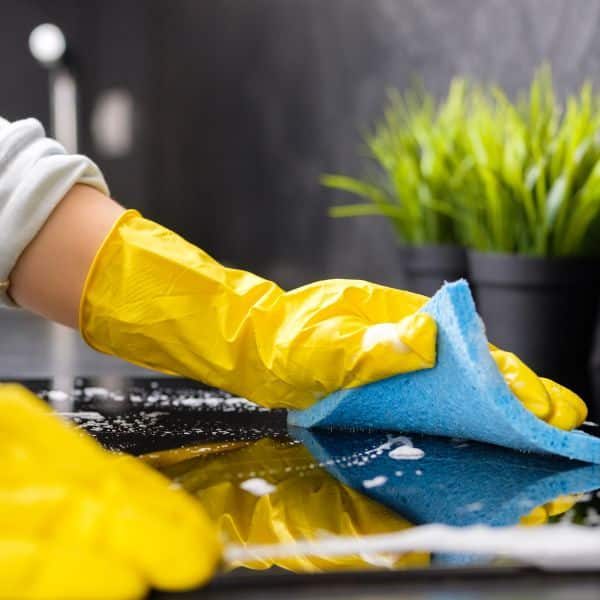
Spray a mild commercial kitchen degreaser or a mixture of warm water and a few drops of grease-cutting dish soap onto your microfiber cloth—never directly onto the wood or painted surface.
Wipe in sections
Work in small sections, letting the solution sit for 30 to 60 seconds to cut through the heavy oil film before gently wiping away the loosened residue.
Rinse and dry the surface
Wipe down the cabinets one final time with a clean cloth dampened with plain warm water to remove soap residue, then dry everything completely with a towel.
How range hood maintenance reduces grease buildup
A primary reason grease accumulates so heavily on upper cabinets is an overworked or clogged ventilation fan. Keeping your extraction system running efficiently by following our guide on How to Clean a Range Hood Filter Properly prevents airborne grease from escaping into your kitchen in the first place.
When greasy kitchens need deep cleaning
Tackling heavy, polymerized grease across an entire kitchen is a massive chore. When standard wiping isn’t enough to restore your kitchen’s shine, pairing your routine kitchen maintenance with a thorough Kitchen Cleaning Checklist or a professional deep cleaning session makes all the difference. For more insights on choosing safe formulations, check out our comparison on Baking Soda vs Commercial Cleaners.
Request detailed kitchen cleaning from Vania’s Cleaning Services
Frequently Asked Questions
What removes sticky grease from cabinets?
A mixture of warm water and dish soap, diluted white vinegar, or a mild commercial kitchen degreaser are the most effective options for lifting sticky grease.
Can vinegar clean kitchen grease?
Yes! White vinegar is naturally acidic and cuts through light-to-moderate kitchen grease safely without leaving toxic chemical residues behind.
How do I clean grease from painted cabinets?
Use a soft microfiber cloth dampened with warm water and a mild dish soap, wiping gently without scrubbing too hard to protect the painted finish.
How often should cabinet tops be cleaned?
Cabinet tops should be dusted monthly and given a thorough degreasing wash every 3 to 6 months to prevent thick, hardened buildup from forming.
Is grease buildup included in deep cleaning?
Yes! Professional deep cleaning services routinely include wiping down exterior cabinet faces and high-touch kitchen surfaces to eliminate built-up grease and grime.