How to Clean a Dishwasher and Remove Bad Odors?
Quick Answer
To clean your dishwasher and eliminate bad odors, remove and wash the filter in warm soapy water, wipe down the rubber door gasket and spray arm holes, and run a hot cycle with a bowl of white vinegar followed by a baking soda refresh to leave the interior sparkling.
Why Dishwashers Start to Smell
Although dishwashers clean your dinnerware, they constantly trap tiny food particles, grease, soap scum, and moisture inside dark, warm spaces. Over time, organic debris builds up in hidden crevices and filters, turning into a breeding ground for foul-smelling mold, mildew, and bacteria.
What to Clean First
Filter
Located at the bottom of the tub, the filter catches large food particles and is the primary source of bad dishwasher odors if left uncleaned.
Spray arms
Mineral scale and tiny food bits can clog the small jets on the rotating spray arms, reducing water pressure and washing efficiency.
Door gasket
The rubber seal around the door rim traps moisture, soap residue, and mold spores that regular wash cycles often miss.
Interior walls
Grease and hard water film coat the stainless steel or plastic walls over time, dulling the interior shine.
Step-by-Step Dishwasher Cleaning
Remove debris
Pull out the bottom rack, inspect the drain area at the bottom of the tub, and scoop out any trapped food particles, bits of paper, or debris by hand.
Wipe the seal and edges
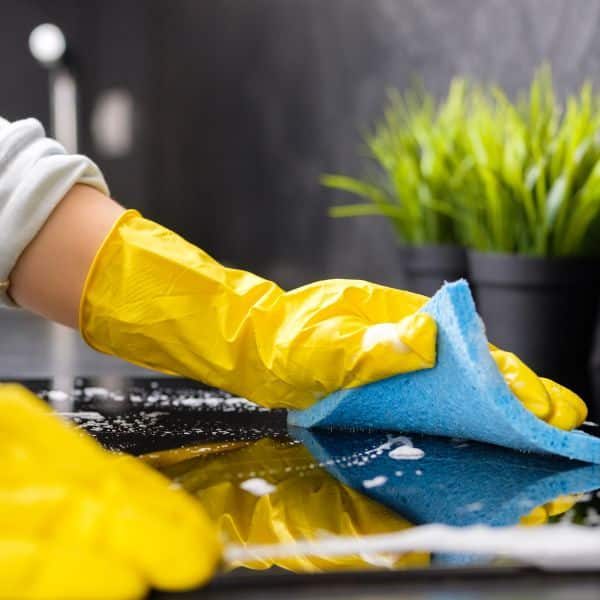
Dip a soft cloth in warm soapy water and wipe carefully around the rubber door gasket, scrubbing away any hidden mold or sticky residue in the folds.
Run a cleaning cycle
Place a dishwasher-safe bowl filled with one cup of white vinegar on the top rack and run a hot water cycle to break down grease and neutralize smells. Afterward, sprinkle a cup of baking soda across the bottom of the tub and run a short hot cycle to brighten the interior.
Leave the door cracked to dry
Once the cycle finishes, leave the dishwasher door cracked open for a few hours to let the interior air dry completely, preventing future mildew growth.
When vinegar helps and when it is not enough
While white vinegar is fantastic for dissolving light grease and mineral buildup, heavily neglected dishwashers with stubborn mold or calcified mineral scale may require a dedicated commercial dishwasher cleaner to fully restore peak performance.
How kitchen cleaning routines prevent appliance odors
Maintaining your dishwasher is a vital part of keeping your entire culinary space fresh. For advice on eliminating other lingering household smells, explore our guides on How to Clean Kitchen Sink Drains Naturally and the Best Way to Clean an Air Fryer. When tackling your kitchen, incorporating appliance care into a broader Kitchen Cleaning Checklist ensures every corner of your kitchen sparkles.
Keep kitchens fresher with recurring maid service
Frequently Asked Questions
What is the best way to clean a dishwasher?
The best way combines manual detailing—cleaning the filter and wiping the door seal—with a running vinegar and baking soda cleaning cycle to sanitize the interior.
Why does my dishwasher smell bad?
Dishwashers smell bad when food particles, grease, and moisture get trapped in the filter, door seals, and drain sump, where bacteria and mold multiply in the dark.
Should I clean the dishwasher filter?
Yes, cleaning the filter is essential. If the filter is clogged, dirty water recirculates onto your dishes and generates sour odors.
Can vinegar clean a dishwasher?
Yes! White vinegar is fantastic for breaking down grease, neutralizing unpleasant odors, and dissolving hard water mineral scale inside a dishwasher.
How often should a dishwasher be cleaned?
You should clean the filter and door gasket once a month, and run a vinegar or cleaner cycle every 1 to 3 months to keep the machine fresh.