House Cleaning Tips for Allergy Sufferers
For those with allergies, the home should be a sanctuary—but it often harbors hidden triggers like dust mites, pet dander, and pollen. Cleaning, if done incorrectly, can actually make symptoms worse by stirring up these particles. At Vania’s Cleaning Services, we use specialized techniques to remove allergens without spreading them.
Here is your strategic guide to maintaining an allergy-friendly home.
How Cleaning Helps Reduce Indoor Allergens
Regular cleaning is the most effective way to improve your indoor air quality. By removing dust, pet dander, and mold spores from surfaces, you prevent these particles from becoming airborne. When performed with the right tools—like HEPA vacuums and microfiber cloths—cleaning “traps” allergens rather than just moving them around.
Common Allergens Found in Homes
- Dust Mites: Microscopic pests that thrive in warm, humid environments, commonly found in bedding and upholstery.
- Pet Dander: Tiny flecks of skin shed by cats, dogs, and other animals, which are highly allergenic.
- Pollen: Tracked in from outside, pollen clings to clothes, shoes, and hair.
- Mold Spores: Thriving in damp areas like bathrooms, basements, and kitchens, mold can trigger severe respiratory reactions.
Best Cleaning Routine for Allergy Sufferers
- High-to-Low Rule: Always start dusting at the top of a room (ceiling fans, high shelves) and work your way down so that falling dust is collected in the final floor vacuuming.
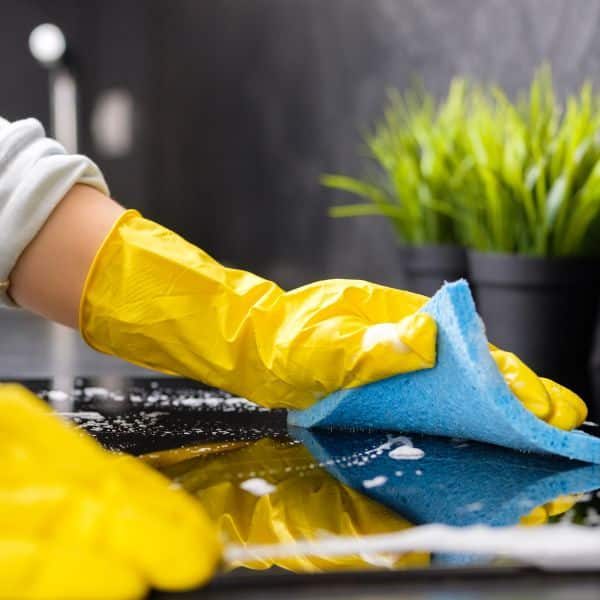
- Damp Cleaning: Never dry dust! Use a damp microfiber cloth to trap particles.
- Frequency: To keep dust mites in check, aim for a deep-clean session twice a week rather than one massive, disruptive session.
- Ventilation: Always clean in a well-ventilated area. Open windows or use exhaust fans, but avoid doing so during high-pollen seasons.
Bedroom Cleaning Tips for Better Sleep
The bedroom is the most critical room for an allergy sufferer.
- Encase Everything: Use dust-mite-proof covers on mattresses and pillows.
- Weekly Wash: Wash bedding in 130°F (54°C) water to kill dust mites.
- Declutter: Minimize knickknacks and stored items under the bed, as these are major dust collectors.
- Pet-Free Zone: Keep pets out of the bedroom entirely to ensure your sleeping environment remains dander-free.
Vacuuming, Dusting, and Mopping Tips
- HEPA Filtration: Use a vacuum equipped with a HEPA (High-Efficiency Particulate Air) filter. Standard vacuums often exhaust fine dust back into the air.
- Skip the Broom: Brooms kick up allergens. Use a vacuum or a static-charged dry sweeper cloth to capture debris.
- Wet Mopping: Hard floors should be damp-mopped weekly to pick up any remaining microscopic dust that vacuuming missed.
Cleaning Products to Avoid if You Have Allergies
Avoid products with strong synthetic fragrances, as these are common asthma and allergy triggers. Skip bleach where possible, or use it only for mold (with a mask). Instead, opt for fragrance-free, plant-based, or natural cleaners like vinegar and baking soda.
When Professional Cleaning Can Help
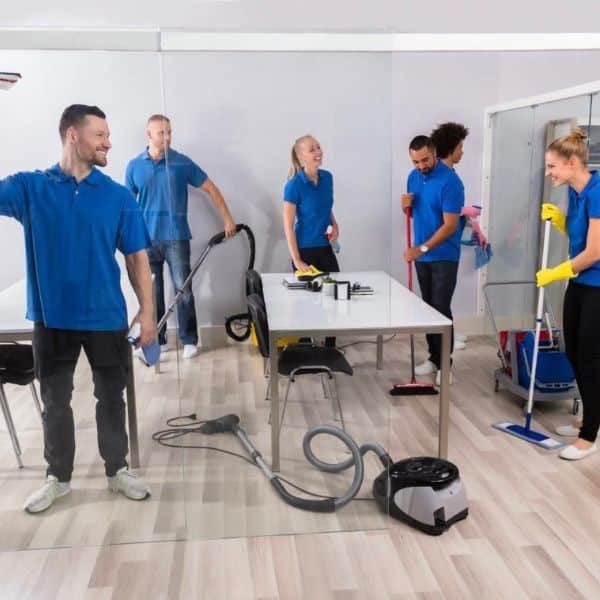
If your symptoms are severe, the physical act of cleaning might trigger an attack. Professional cleaners, like those at Vania’s Cleaning Services, have the commercial-grade equipment and experience to remove deep-seated allergens without spreading them through your home. We can provide that “reset” your home needs to keep you breathing easy.
FAQ
How often should you clean if you have allergies?
Ideally, high-touch areas and floors should be cleaned twice a week to prevent allergen accumulation.
Does deep cleaning help with allergies?
Yes. Deep cleaning addresses “neglected” areas—like inside vents, under heavy furniture, and deep within upholstery—where allergens hide and multiply.
Is dusting or vacuuming better first?
Always dust first (high-to-low), then vacuum last to capture all the dust that has settled on the floors.
What cleaning products are best for allergies?
Fragrance-free, non-toxic, and hypoallergenic products are best. Vinegar and baking soda are excellent natural alternatives to harsh chemicals.
Can house cleaning improve indoor air quality?
Absolutely. Regular cleaning reduces the volume of airborne pollutants, and using HEPA filtration during cleaning ensures that trapped allergens don’t return to the air.
Ready for a home that lets you breathe easier? Vania’s Cleaning Services uses allergy-conscious methods to ensure your space is truly sanitized. Click here to book a professional cleaning and reclaim your sanctuary!