How to Clean Your Shower? The Professional Guide to a Grime-Free Space
A clean shower is the foundation of a refreshing bathroom. Whether you are dealing with daily soap scum or stubborn mildew in the grout, this guide provides a systematic approach to getting the job done efficiently.
Quick Answer: Use a Degreaser or Vinegar Solution and Scrub Surfaces
The most effective way to clean a standard shower is to apply a degreasing agent (like dish soap) or an acidic solution (like white vinegar) to break down oils and minerals. Spray the surface, let it sit for at least 10 minutes, scrub with a medium-bristle brush, and rinse with hot water.
Step-by-Step Cleaning
Follow these steps for a professional-grade deep clean:
- Clear the Area: Remove all shampoo bottles, loofahs, and razors. This is a great time to wipe down the bottoms of bottles which often collect slime.
- Dry Brush Grout: Before getting anything wet, run a stiff grout brush over dry lines to loosen any surface dust or dried debris.
- Apply Cleaner: Spray your cleaner starting from the top of the shower and working your way down.
- For Tile/Acrylic: Use a 50/50 vinegar and water mix.
- For Stone: Use a specialized pH-neutral stone cleaner.
- The Dwell Phase: Let the cleaner sit for 10 to 15 minutes. Do not let it dry completely. This “dwell time” does 90% of the work for you.
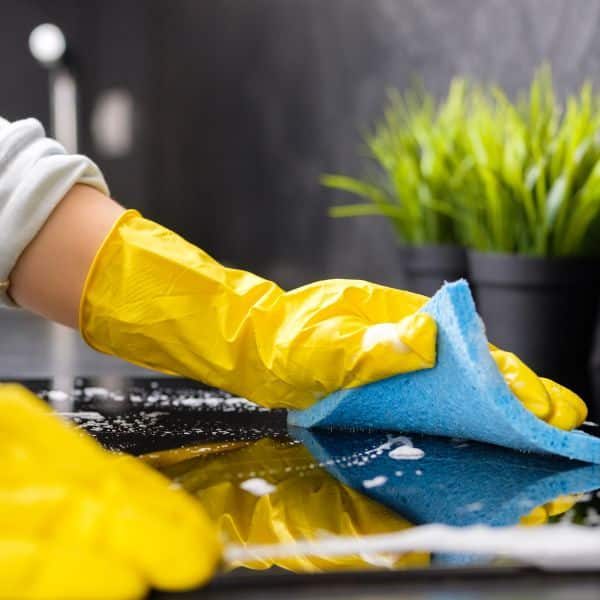
- Scrub: Use a non-scratch sponge for the walls and a stiff brush for the grout lines and textured floors.
- Detail the Fixtures: Use an old toothbrush to scrub around the faucet, handles, and the showerhead where lime scale accumulates.
- Rinse & Dry: Rinse with the showerhead or a bucket of clean water. Dry the surfaces with a microfiber cloth to prevent water spots.
Best Tools for the Job
Investing in the right tools makes the process significantly faster:
- Extendable Scrubber: Saves your back and helps reach the high corners of the shower walls.
- Grout Brush: A narrow, stiff-bristled brush specifically designed to fit into the lines between tiles.
- Microfiber Cloths: Superior for polishing chrome fixtures and drying glass without leaving lint.
- Squeegee: The best tool for daily maintenance to prevent future buildup.
- Drill Brush Attachment: For heavy-duty cleaning, a nylon brush attached to a power drill can remove years of grime in seconds.
Common Mistakes to Avoid
- Mixing Chemicals: NEVER mix bleach with ammonia or vinegar. This creates toxic chloramine or chlorine gas, which is extremely dangerous in enclosed spaces like a bathroom.
- Using Abrasives on Acrylic: Using steel wool or harsh scouring powders on fiberglass or acrylic tubs will create tiny scratches that permanently dull the finish and trap dirt.
- Forgetting the Shower Curtain: Plastic liners can usually be tossed in the washing machine with a few towels on a cold cycle to remove mildew.
- Rinsing with Cold Water: Warm or hot water is much more effective at dissolving soap scum during the final rinse.
FAQ
How do I remove hard water buildup from a showerhead?
Fill a plastic bag with white vinegar, submerge the showerhead in it, and tie it in place with a rubber band. Let it soak for several hours or overnight, then scrub with a toothbrush.
How often should I clean my shower?
A light cleaning should be done once a week to prevent soap scum from hardening. Deep cleaning (including grout scrubbing) should happen once a month.
Why does my shower smell like “rotten eggs”?
This is often caused by bacteria growing in the P-trap or hair buildup in the drain. Pouring a mixture of baking soda followed by vinegar down the drain can help clear the odor.
Pro Tip: To keep your shower cleaner for longer, leave the bathroom fan running for 20 minutes after your shower to reduce moisture and prevent mold growth.